



Ceramic restorations with the CEREC system
When is CEREC used?
Smaller tooth defects are often repaired with minimally invasive composite fillings. If the defect is too large, however, there is a risk that the repaired tooth becomes unstable and that the composite filling or, in the worst case, the tooth itself fractures under heavy chewing load. In such cases a ceramic restoration (crown, inlay, onlay or overlay) is indicated. The tooth is first prepared by the dentist reducing it. An impression is taken of the prepared tooth and, on that basis, a restoration is produced that is fitted later.
The CEREC system comes in at this last stage and makes considerable time savings possible.
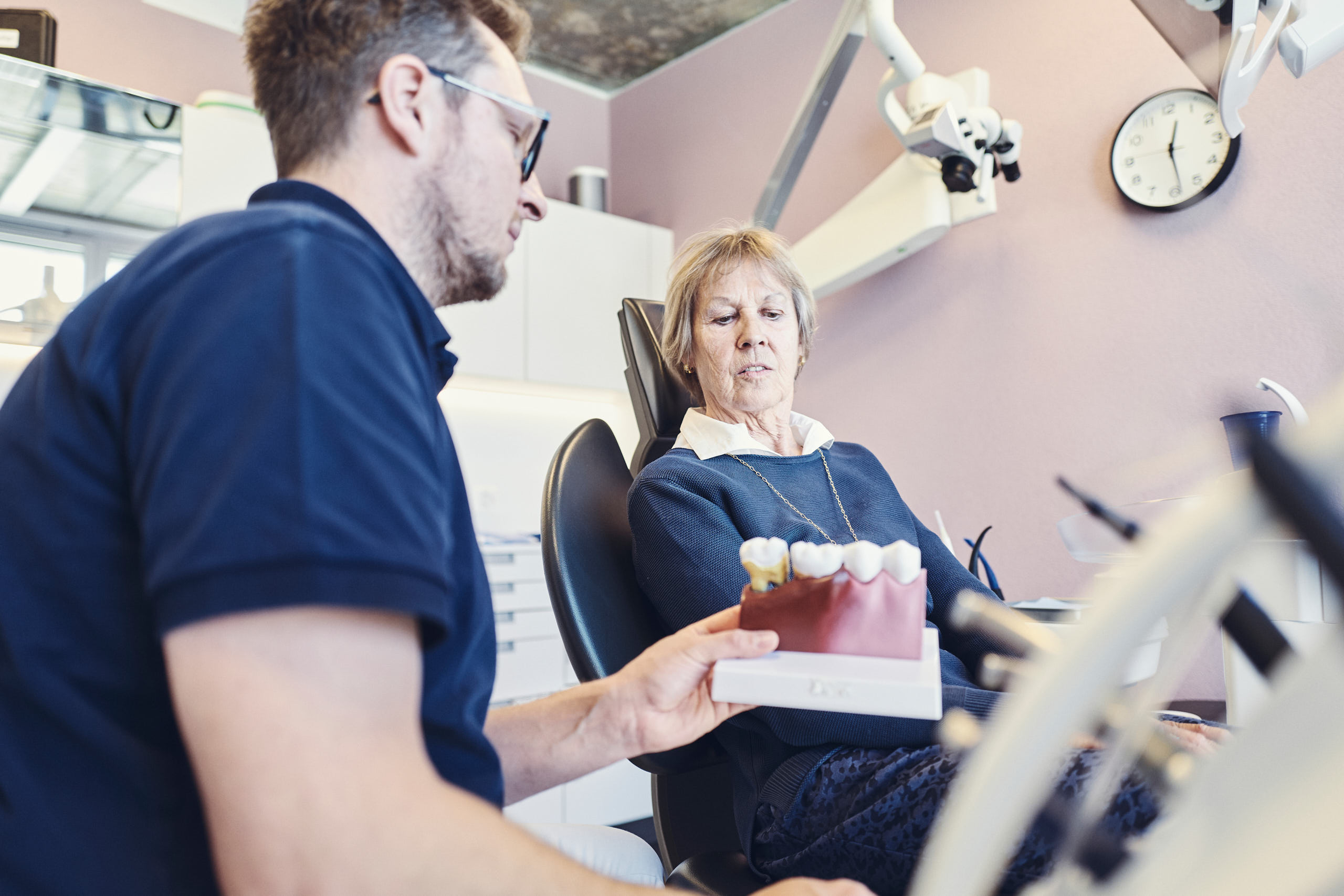
Why choose CEREC at Züri Zahni in Glattpark, Zurich?

Fast and Precise
With CEREC, you benefit from same-day dental restorations – no need for a temporary crown or overlay. Since the final crown is crafted and glazed right in our in-house lab, the treatment is quick and seamless.

State-of-the-Art Technology
Thanks to CEREC’s cutting-edge technology – including the Primescan scanner, Primemill milling unit, and Speedfire furnace, all supported by the latest CEREC software – we guarantee top precision, efficiency, and reliability for every treatment.

Experience the Creation of Your Restoration
Watch live as your dental restoration is designed and milled in our Primemill unit. Experience the fascinating moment when your crown takes shape and is brought to life – a treatment that impresses!
Interview with Adrian Cano
We offer you the complete CEREC treatment
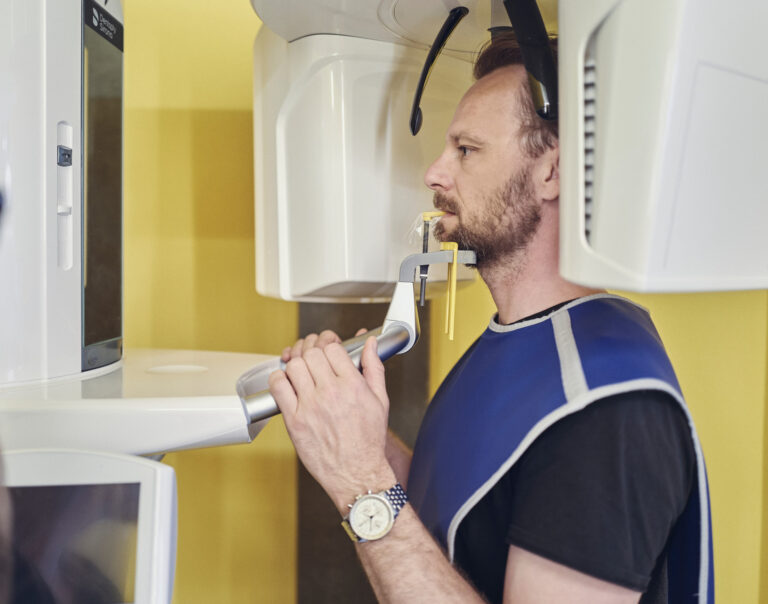
Digital Impressions
Our advanced scanner enables precise digital impressions of your teeth. This step is not only more comfortable than traditional impressions with molding materials but also significantly faster and more efficient. A clean digital impression lays the foundation for a perfectly fitting dental restoration.
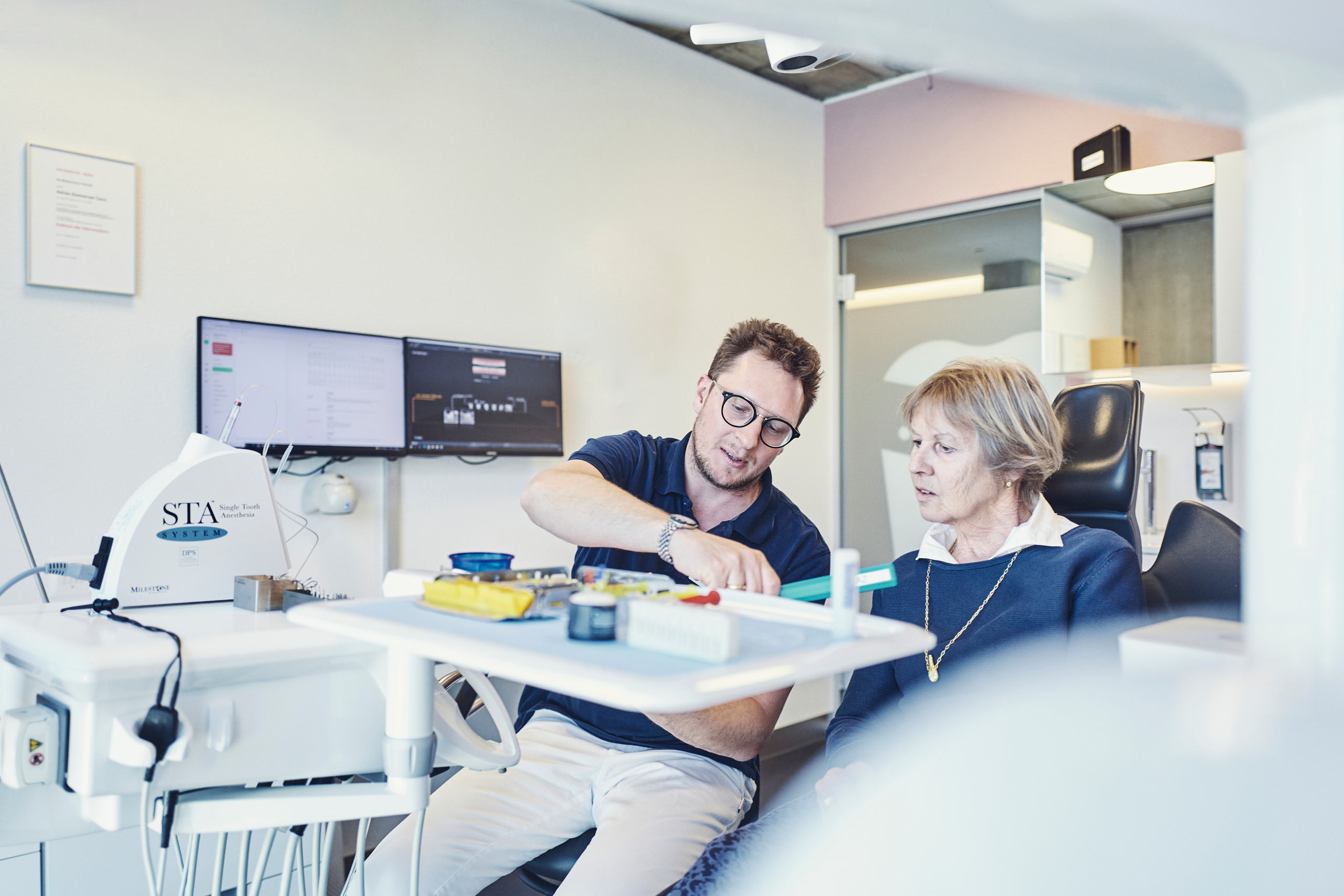
Efficient Digital Workflow
Thanks to digital scans and models, physical plaster or resin models are no longer needed. This fully digital process minimizes potential transfer errors, providing faster, more precise, and efficient design that significantly reduces treatment time.
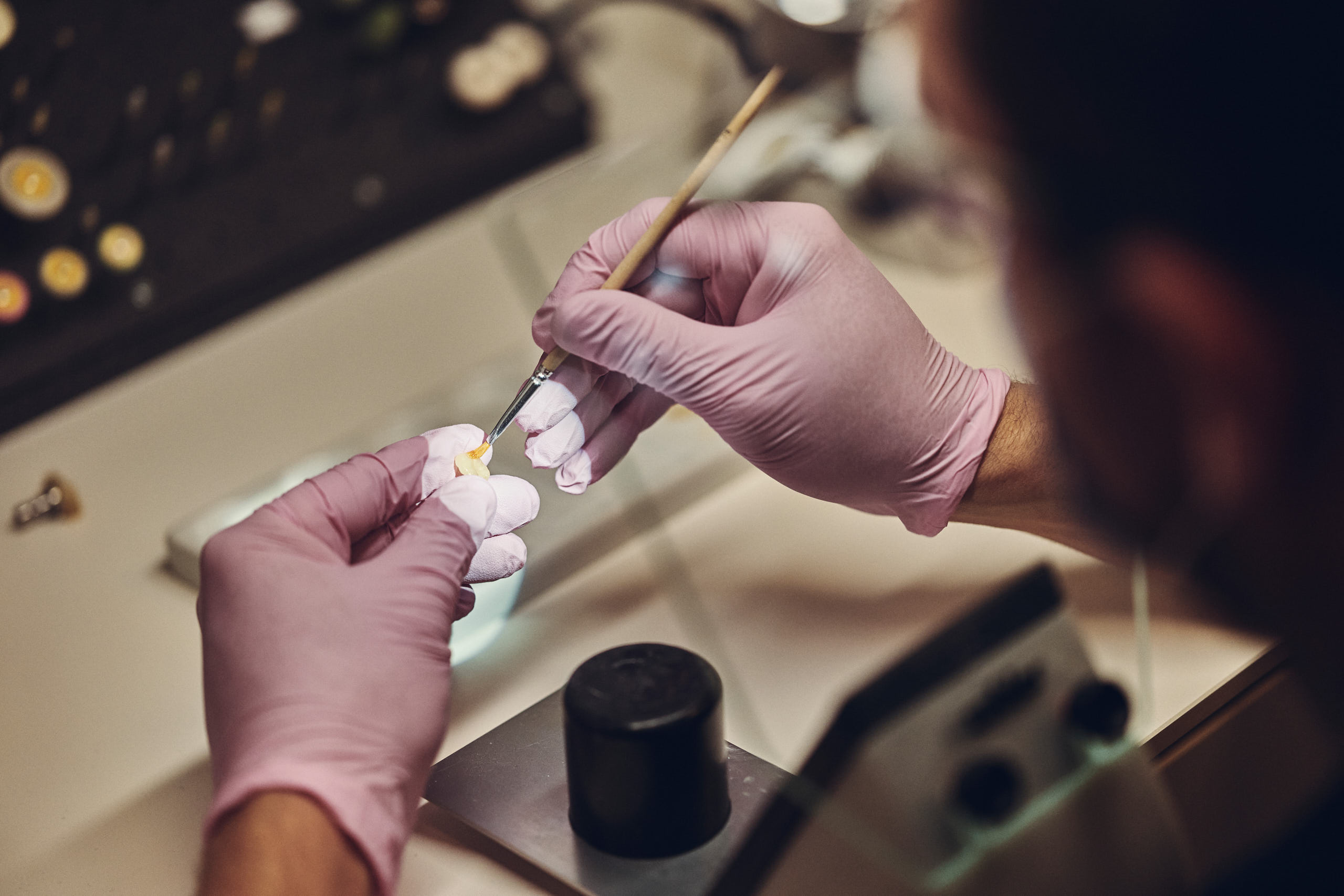
Extensive Material Selection
We select the restoration material based on each case and offer high-quality options from premium manufacturers like Ivoclar, GC, Kuraray, and Dentsply, among others. This ensures top-notch quality, durability, and aesthetics.
CEREC vs. the conventional / indirect method via the dental technician
| Conventional, indirect method | CEREC | |
|---|---|---|
| Impression | With impression material | With a 3D digital camera |
| Laboratory | 1. Pouring the model in plaster 2. Modelling the tooth in wax 3. Pressing the ceramic 4. Polishing/staining | 1. Digital design 2. Milling from a ceramic block 3. Polishing, staining and firing |
| Production time | 7 to 10 days | 30 minutes to 2 hours |
| Fitting the restoration | After production | On the same or the next day |
| Cost of production | +++ | + |

Individual advice and treatment from our experts
My name is Adrian Cano and I am responsible for CEREC treatments at Züri Zahni. With state-of-the-art technology and sound expertise, we focus on precisely fitting, long-lasting dental restorations that we can produce directly on site in our own practice laboratory. Together with our experienced team we guarantee you a fast, individually made restoration that will ideally stay with you for many years.
Book your appointment at Züri Zahni today and experience the future of dental restorations – efficient, esthetic and tailored to your individual needs.
WHAT OUR CUSTOMERS SAY ABOUT US

Elisa Sassi★★★★★ My teeth were never so well taken care of at a dentist before. Neither was I! I couldn’t be more pleased with my experience. Dr. Adrian Cano took the time to meet me and learn my story, so it was so easy to trust him even this being my first time there. My smile is more beautiful than ever PLUS I got to meet some really nice people and watch Netflix on the ceiling while he was getting his work done! Also, to the expats out there, apart from German, they speak English, Spanish and French.

Dana Duppong Triana★★★★★ after many years of not going to dentist because of fear .. it was necessary to give into that fear and I am so happy I have found Dr. Zimmermann and her team who treated me with care, understanding, patience and no judgement. The treatment received was well explained and procedures handled as gentle as possible and costs explained and were reasonable for treatment received. I highly recommend Dr. Zimmermann and her team.

Marie Claire Claus★★★★★ The work they do is top quality, I highly recommend them. I had many of my teeth fixed and now waiting for Invisalign treatment! I really appreciate that they spoke to me in English whilst providing me with an excellent painless service. I highly appreciate the call the day after each procedure to check if you are ok or if you have any pain! Keep this up, it shows that you care for you patients.

Xavier Tinguely★★★★★ Awesome high-tech dentist practice. I would highly recommend the place & Dr Cano. Love watching Netflix while having my teeth done! The team is also very professional and passionate about their job. Great experience

Paul Dirksen★★★★★ Admittedly... I don't think anyone is looking forward to going to the dentist. But going to Züri Zahni has always been a pleasure! Very friendly and professional staff. They know how to comfort you and they are very communicative in what will happen and why. On top of that, it is the first dentist that I encounter, that does follow-up calls with their clients to see how things are going the day after.

Vanessa B★★★★★ Very pleasant office, immediately felt welcomed and calm when I came in. They have a very friendly team and a relaxed atmosphere. Dr. Andrea Zimmermann was a great dentist. You can also watch Netflix during your treatment if you'd like to. 10/10 would recommend.

Nicole Aebersold★★★★★ We have been there with our son, 3 years old. he had to have his front tooth removed. everybody at the practice was very understanding and friendly - and of course the most important fact - very professional. thank you a lot!

Anne Carolina Ramos★★★★★ I've been at Züri Zahni in different times, for me and my children. Dr. Zimmermann and all the assistants are simple great! They are very friendly, careful and efficient. Moreover, they organise everything to make you feel at home (including netflix with headphones while they work). I strongly recommend them and I'm very happy to have them so close by!

Joanna G★★★★★ I highly recommend Zahnarztpraxis Zuri Zahni! Very professional and painless treatment, friendly doctors, transparent cost description, preventive recommendations for the future. PS. On top of it you can watch netflix ;-)

Nicolas Mottais★★★★★ For the first time in my life i was happy to go the dentist. Frau Zimmerman and her Team were welcoming and patient, they listen and advise me all the way. they were very professional but also very easy to talk to and very accomodating. highly recommend them.

STILL HAVE QUESTIONS?
DO YOU WISH AN APPOINTMENT?
Questions & answers
What is CEREC?
CEREC, short for “Chairside Economical Restoration of Esthetic Ceramics”, is an innovative technology that allows us to produce precise, esthetically high-quality ceramic restorations directly in our practice. The CEREC system consists of a powerful combination of devices: a 3D camera for the digital scan, a state-of-the-art CAD-CAM grinding and milling unit for the exact machining of the ceramic, and a special furnace that hardens the restoration. This technique lets us make and fit a custom ceramic restoration within a single appointment – for fast results and maximum comfort.
How long has CEREC been around?
CEREC technology has its roots in Switzerland and was developed in 1980 by the pioneers Werner H. Mörmann and Marco Brandestini at the University of Zurich. The first version of the system, known as CEREC 1, was brought to market by Siemens in 1987. CEREC has been developed continuously ever since and has established itself as a proven method that has delivered excellent results and patient satisfaction for over 40 years.
What types of restorations can be made with CEREC?
A variety of ceramic restorations can be produced with the CEREC system, including:
Crowns: To replace the entire tooth crown. There are three main types of crown: full crowns (covering the whole tooth), partial crowns (covering only part of the tooth) and post crowns (anchored on a post in the root canal).
Inlays and onlays: For rebuilding parts of the tooth crown. Inlays fill the cavities, while onlays also cover the cusps.
Overlays: Similar to onlays, but covering a larger area of the tooth.
Veneers: Thin shells for the front teeth. Veneers are only made with CEREC in less esthetically demanding situations. In esthetically demanding cases the craft of the dental technician is required.
Bridges: To replace missing teeth by joining two or more teeth. Bridges can span a maximum of 4 units in the anterior and premolar region and a maximum of 3 units in the posterior region
Is the CEREC treatment painful?
The CEREC treatment is generally painless, because we use a local anesthetic that works in much the same way as for conventional fillings. To improve our patients' comfort further, we use The Wand, a modern anesthesia device that delivers the anesthetic gently and precisely. In some cases it may be necessary to polish at the gum margin, which can cause slight irritation. These soft-tissue wounds usually heal within a few days. After the treatment the tooth may be sensitive for a few days or weeks, or feel different because of the slightly altered occlusion.
How should I prepare for a CEREC treatment?
Before the treatment you should make sure that you have brushed your teeth thoroughly and used dental floss. Tell your dentist about all the medication you take and about any health problems you may have.
Workflow of a CEREC Treatment
1. Preliminary examination At the start of the CEREC treatment we carry out a thorough examination. This includes measuring the gum pockets, an X-ray, a vitality test, checking tooth mobility and the percussion test, in order to establish how sensitive to pain the tooth is. These steps make sure the tooth is suitable for a CEREC restoration.
2. Anesthesia and isolation For a painless treatment we use the “The Wand” system, a particularly gentle method of local anesthesia. We then isolate the tooth with a dental dam or Iso Vac to create a dry, clean working field.
3. Removing old restorations Old fillings or restorations are removed. If the margins lie too far subgingivally, we carry out a box elevation to position the margins of the new CEREC restoration further away from the gingiva. This allows clean isolation and prevents moisture or blood from reaching the restoration margin.
4. Tooth preparation The tooth is prepared for the CEREC restoration by being brought into the right shape. Where appropriate we shorten cusps or take the tooth out of occlusion, in order to optimize the distribution of forces and reduce the fracture risk of the remaining tooth structure.
5. Digital scan and bite registration Using the CEREC Primescan we create a precise 3D impression of the prepared tooth, of the entire arch of the upper and lower jaw and a bite registration. After the scan the shade is selected, to make sure the restoration matches the surrounding teeth perfectly.
6. Designing the CEREC restoration The individual restoration is designed and adjusted digitally in the CEREC software. In doing so we make sure that there are no interferences in the occlusion and that the contact points sit firmly, to guarantee a perfect fit.
7. Producing the CEREC restoration The digitally designed restoration is milled from a ceramic block with the CEREC Primemill. This process takes only a few minutes.
8. Try-in, finishing and fitting The CEREC restoration is checked before fitting and adjusted if necessary. It is then fired in the SpeedFire furnace, glazed if required and afterwards conditioned. The finished restoration is fitted with a special composite cement. Excess is removed and the restoration is polished carefully.
9. Completion and follow-up check After the CEREC treatment we check the bite and take a control X-ray. A follow-up check after 1–2 weeks may be recommended to secure long-term success.
What Happens After a CEREC Treatment?
After the CEREC treatment the anesthetic can still be working for some time, so there is a risk of biting injuries. It is advisable to wait until the numbness has worn off. Fluoride is applied to remineralize demineralized areas. Nothing should be eaten or drunk for at least one hour after the treatment.
Are There Special Care Instructions for CEREC Restorations?
Yes, to ensure the longevity of your CEREC restoration you should:
- Use a sonic toothbrush: They are more effective at removing plaque. - Toothpaste with fluoride and fluoride gel: Helps to strengthen the teeth. - Tongue cleaning: Reduces the bacterial load in the mouth. - Use dental floss and/or interdental brushes: Cleans between the teeth. - Regular check-up appointments: At least once, ideally twice a year for dental hygiene (DH).
How Long Does a CEREC Crown Last?
A CEREC crown usually lasts 5 to 10 years. With good care, however, they can last longer.
What Does a CEREC Crown Cost Compared to a Conventional Crown?
A CEREC crown costs around CHF 1500, while conventional crowns can cost around CHF 2500. These are guide values only. Prices can vary depending on the situation, especially when additional procedures are required, such as root canal treatments, building up deep margins or tooth defects, gingivoplasty/gingivectomy, preconditioning of the gum, and so on.
Who Is a Suitable Candidate for CEREC Restorations?
CEREC restorations are suitable for most patients who need a dental restoration. Your dentist will carry out a thorough examination to make sure this method is right for your specific needs.
When Is a CEREC Restoration Not Suitable?
A CEREC restoration may not be suitable in the following situations:
- Defect too small: If the tooth defect is too small, a conventional filling is sufficient. - Tooth not worth preserving: If the tooth is too badly damaged and cannot be saved, extraction and possibly an implant is the better solution. - Extremely deep margins: If the margins of the restoration lie deep below the gum and are hard to reach. - High esthetic demands: In cases with very high esthetic demands, especially in the anterior region, the craft of a dental technician may be required. - Poor oral hygiene: In patients with poor oral hygiene and a high risk of decay, long-term success is harder to guarantee.
What Equipment and Materials Do We Use in Our Practice?
In our practice we use the latest models in the CEREC range: CEREC Primescan, Primemill and SpeedFire. Our materials come only from the best, most researched and clinically proven companies such as Ivoclar, GC, Dentsply Sirona, Kuraray Noritake and others.