


Implantology at Züri Zahni – the highest precision and quality
What are dental implants?
A dental implant is a screw made of metal or ceramic that serves as an artificial tooth root embedded in the jawbone. After a healing period of 2 to 6 months, during which you may wear a temporary prosthesis, a dental crown or bridge is fixed onto the implant. A dental implant is only placed if there is no reasonable alternative or if implantation offers significant advantages over alternative treatments (such as root canal therapy, bridges, or removable dentures). A healthy, natural tooth typically surpasses an implant in terms of longevity.
Dental implants have been used for about 40 years (approximately 70,000 per year in Switzerland). The survival rate of implants after 10 years is about 90%.
Why choose implantology at Züri Zahni in Glattpark?

Personalized planning and the latest technology
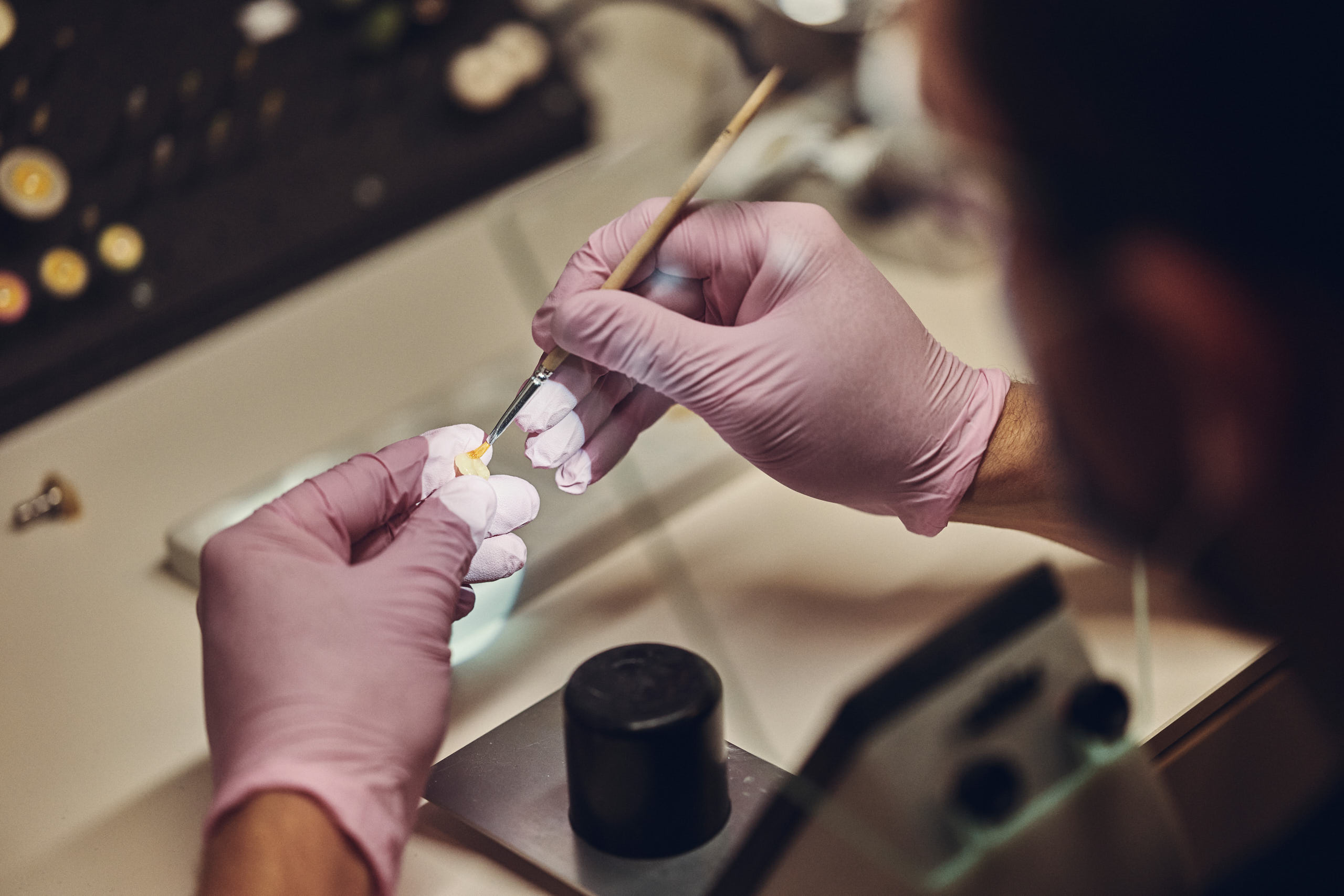
We develop an implant solution tailored to your needs, supported by the latest technology such as intraoral scanners, digital volume tomography (DVT) and digital planning software. Guided implantation techniques ensure the highest precision and gentle treatment.

Solutions for complex cases
You can count on our expertise even in challenging situations involving bone regeneration or sinus lifts. We work with first-class Swiss materials to ensure esthetic and functional results at the highest level.

Long-term care and stability
After the implantation, we will be at your side with regular check-ups and professional aftercare. This is how we ensure that your implants are long-lasting and that your oral health is maintained in the long term.
Interview with Delia Irani
We offer you the full range of implantology services
Minimally invasive procedures for more comfort
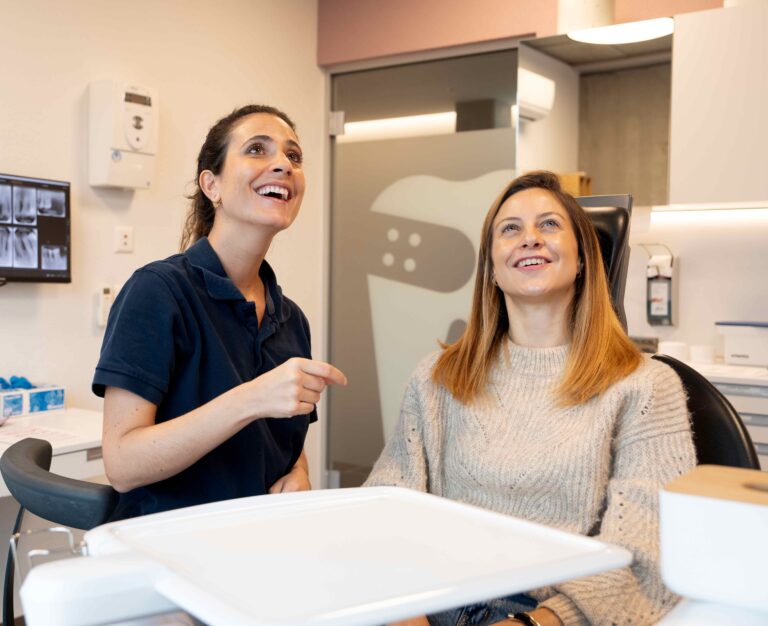
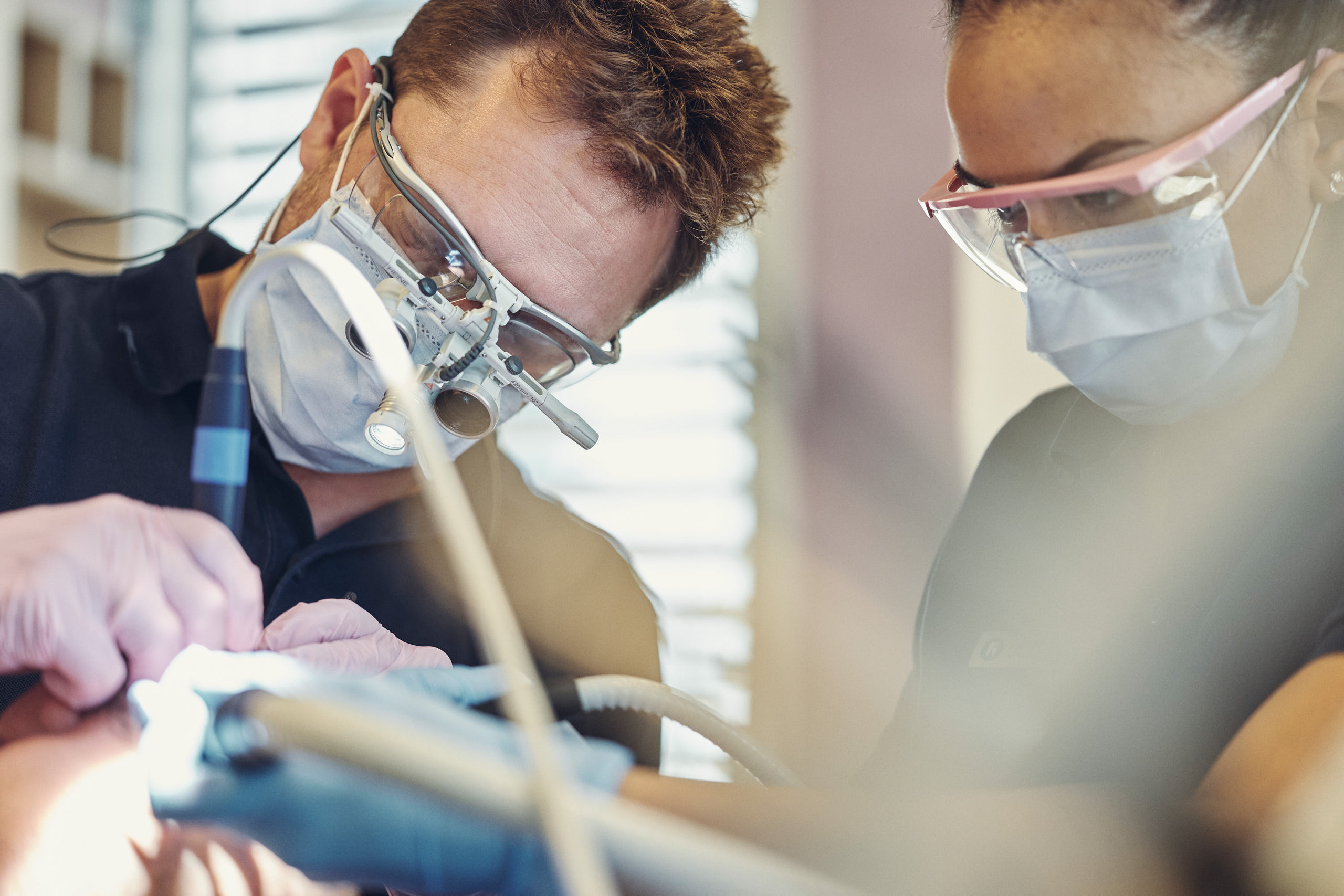
We use the latest techniques to place implants as gently as possible. Thanks to precise planning and minimally invasive methods, we shorten the healing time and ensure a pleasant and painless treatment with maximum safety.
Guided implantation techniques
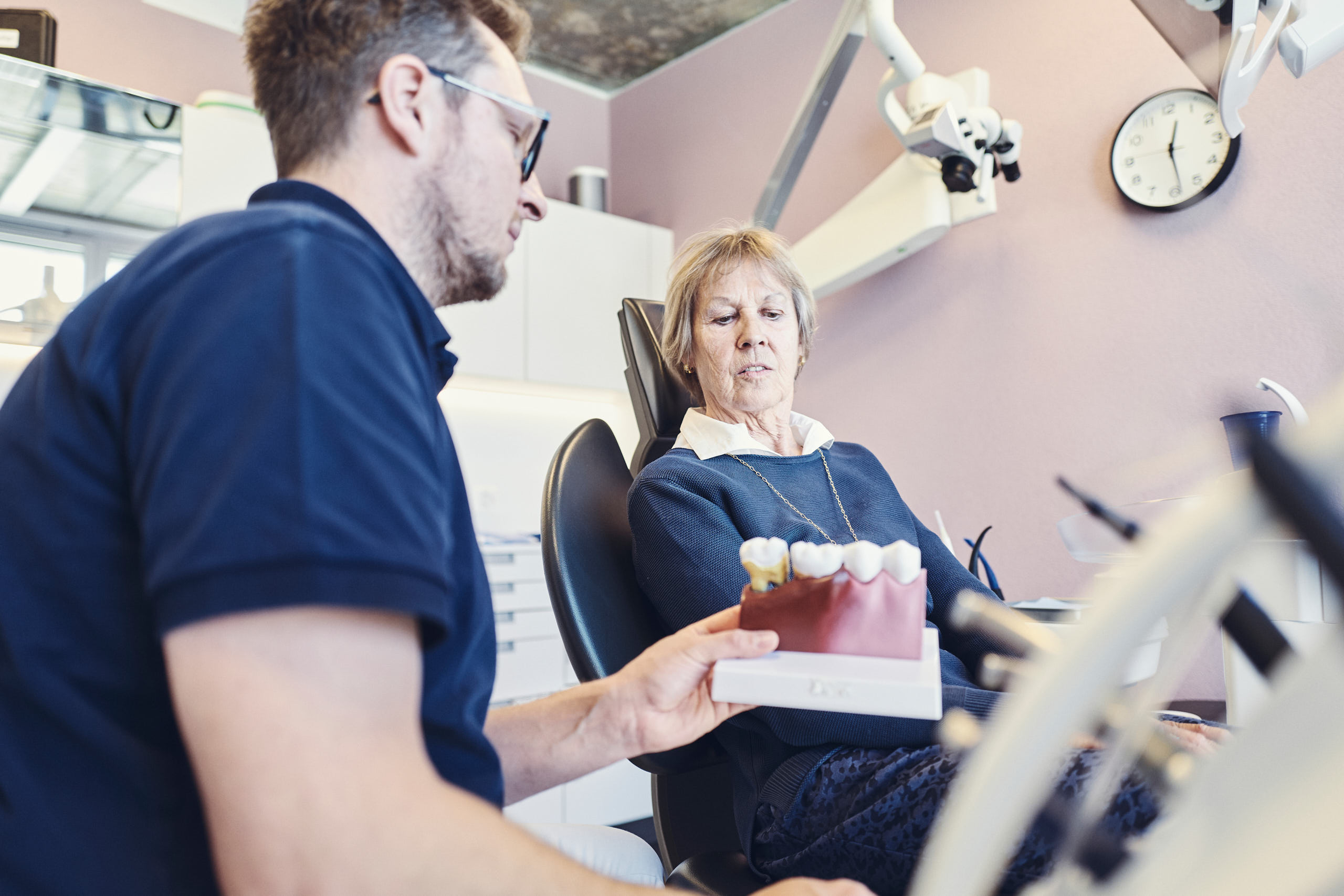
We use guided implantation procedures that involve the use of special drill templates. This technique ensures maximum precision when placing the implant, minimizes risks and ensures optimal aesthetic and functional integration.
Bone augmentation and regenerative procedures
For challenging cases, we offer innovative techniques such as guided bone regeneration and sinus lift. With first-class Swiss materials, we create optimal conditions for stable and long-lasting implants.
WHAT OUR CUSTOMERS SAY ABOUT US

Elisa Sassi★★★★★ My teeth were never so well taken care of at a dentist before. Neither was I! I couldn’t be more pleased with my experience. Dr. Adrian Cano took the time to meet me and learn my story, so it was so easy to trust him even this being my first time there. My smile is more beautiful than ever PLUS I got to meet some really nice people and watch Netflix on the ceiling while he was getting his work done! Also, to the expats out there, apart from German, they speak English, Spanish and French.

Dana Duppong Triana★★★★★ after many years of not going to dentist because of fear .. it was necessary to give into that fear and I am so happy I have found Dr. Zimmermann and her team who treated me with care, understanding, patience and no judgement. The treatment received was well explained and procedures handled as gentle as possible and costs explained and were reasonable for treatment received. I highly recommend Dr. Zimmermann and her team.

Marie Claire Claus★★★★★ The work they do is top quality, I highly recommend them. I had many of my teeth fixed and now waiting for Invisalign treatment! I really appreciate that they spoke to me in English whilst providing me with an excellent painless service. I highly appreciate the call the day after each procedure to check if you are ok or if you have any pain! Keep this up, it shows that you care for you patients.

Xavier Tinguely★★★★★ Awesome high-tech dentist practice. I would highly recommend the place & Dr Cano. Love watching Netflix while having my teeth done! The team is also very professional and passionate about their job. Great experience

Paul Dirksen★★★★★ Admittedly... I don't think anyone is looking forward to going to the dentist. But going to Züri Zahni has always been a pleasure! Very friendly and professional staff. They know how to comfort you and they are very communicative in what will happen and why. On top of that, it is the first dentist that I encounter, that does follow-up calls with their clients to see how things are going the day after.

Vanessa B★★★★★ Very pleasant office, immediately felt welcomed and calm when I came in. They have a very friendly team and a relaxed atmosphere. Dr. Andrea Zimmermann was a great dentist. You can also watch Netflix during your treatment if you'd like to. 10/10 would recommend.

Nicole Aebersold★★★★★ We have been there with our son, 3 years old. he had to have his front tooth removed. everybody at the practice was very understanding and friendly - and of course the most important fact - very professional. thank you a lot!

Anne Carolina Ramos★★★★★ I've been at Züri Zahni in different times, for me and my children. Dr. Zimmermann and all the assistants are simple great! They are very friendly, careful and efficient. Moreover, they organise everything to make you feel at home (including netflix with headphones while they work). I strongly recommend them and I'm very happy to have them so close by!

Joanna G★★★★★ I highly recommend Zahnarztpraxis Zuri Zahni! Very professional and painless treatment, friendly doctors, transparent cost description, preventive recommendations for the future. PS. On top of it you can watch netflix ;-)

Nicolas Mottais★★★★★ For the first time in my life i was happy to go the dentist. Frau Zimmerman and her Team were welcoming and patient, they listen and advise me all the way. they were very professional but also very easy to talk to and very accomodating. highly recommend them.



LET OUR EXPERTS ADVISE YOU
Our names are Adrian Cano and Delia Irani, and together we are responsible for implantology at Züri Zahni. With our expertise and our passion for modern dentistry, we are at your side to give you the best possible care with dental implants.
We believe in the highest quality in implantology: we use high-end Swiss implants and regenerative materials, work with precise digital planning and the most modern technologies such as intraoral scanners, DVT and digital planning software. You can count on our experience even in complex cases with bone regeneration or sinus lifts.
Arrange a consultation with us – we will be happy to answer your questions and show you the wide range of options that Züri Zahni offers in the field of implantology.
STILL HAVE QUESTIONS?
DO YOU WISH AN APPOINTMENT?
Questions & answers
What are dental implants, and when are they used?
Dental implants are screws made of high-performance materials such as titanium, a titanium-zirconium alloy, or ceramic, which replace the roots of one or more missing teeth. All materials are characterized by excellent tissue compatibility, and no allergies to these materials are known.
After the surgical placement of the implant into the jawbone, it is restored with a crown, bridge, or removable prosthesis following a healing period of a few weeks to months. Dental implants can replace single or multiple teeth. Even completely edentulous jaws can be restored with implants, enabling fully fixed reconstructions. Additionally, implants can significantly improve the retention of removable dentures.
Is a dental implant suitable for everyone?
In principle, yes, with some exceptions.
The prognosis for dental implants is poor in patients with untreated or acute chronic periodontitis (gum disease), heavy smokers, or poor oral hygiene without regular professional dental hygiene visits.
There are cases where placing a dental implant may be limited or not possible due to general medical conditions or the use of certain medications. These include, for example, medications for treating osteoporosis (such as bisphosphonates or denosumab).
Each case must be individually assessed based on risk factors. If an implant cannot be placed, there are good alternatives for missing teeth, such as bridges or removable dentures.
How is an implant planned?
Before any implantation, a consultation and information session, a thorough clinical examination, and radiographic diagnostics are performed. The basis of radiographic diagnostics is the orthopantomogram (OPT), which provides a good two-dimensional (2D) overview of the entire upper and lower jaw. In particularly complex cases, it may be advisable to create an additional three-dimensional (3D) radiograph using digital volume tomography (DVT). The findings and radiographs are used for precise surgical planning to determine if there is sufficient bone and whether bone augmentation is necessary.
Can dental implants be placed using a drilling guide? What is "guided surgery"?
Dental implants can also be placed using a drilling guide, referred to as "guided surgery". This requires a digital volume tomography (DVT) scan and an intraoral scan of the upper and lower jaw. The two datasets are then combined in an implant planning program. The dental implants are digitally planned in an optimal three-dimensional position on the computer. Based on this plan, a drilling guide is produced using CAD/CAM technology. This guide can either be 3D-printed or milled from an acrylic block. This method ensures a very precise and predictable implant position.
What type of implant is used?
We offer a wide variety of implant types, lengths, and diameters in our portfolio. The most suitable implant for each situation is determined during the planning phase by the surgeon. In our practice, we use only high-quality, scientifically validated implant systems from Swiss manufacturers with extensive documentation over many years.
How is implantation performed?
The first step involves providing the patient with preoperative medication. After disinfecting the oral cavity, local anesthesia is administered.
The procedure begins with an incision in the gum to expose the bone and mark the exact position for the implant. The jawbone is prepared for the implant using specialized drills tailored to the specific implant system. The screw-shaped implant is then slowly inserted, covered with a protective cap, and the gum is sutured closed. The procedure is documented, and a final control X-ray is taken.
At the end, the patient receives postoperative medication and instructions for aftercare. The healing phase then begins, during which the implant integrates securely and permanently with the bone.
Is the treatment painful?
In most cases, dental implantation is associated with minimal discomfort. Many patients, especially for simpler procedures, report being surprised at how little pain they experience. Of course, for more extensive procedures such as sinus lifts or bone grafts, there may be increased discomfort, swelling, or bruising. However, these types of interventions are relatively rare and can be well managed with painkillers, anti-inflammatory medication, cooling, and rest. In any case, we ensure that you are well cared for and experience minimal discomfort during the treatment. We also provide clear aftercare instructions to help make the healing process as smooth and comfortable as possible.
When is bone augmentation required, and how is it performed?
If diagnostics reveal insufficient bone volume for a dental implant, bone augmentation is often necessary. Minor defects can be corrected simultaneously with implant placement. For this, autologous bone and/or bone substitute materials are used and covered with a special membrane to shield the area from surrounding soft tissue, ensuring proper ossification.
For larger defects, the missing bone is built up in an initial, separate procedure. After a waiting period of up to six months, during which the augmented bone integrates, the implant is placed in a second procedure.
When is a sinus lift/sinus floor elevation necessary?
In the upper molar region, the maxillary sinus lies above the roots of the posterior teeth. When teeth in this area are extracted, the bone may resorb to the extent that the remaining bone height is insufficient for implant placement. In such cases, a procedure called sinus floor elevation (sinus lift) can be performed. Depending on the residual bone height, different methods are used.
Internal vs. External Sinus Lift
In general, we differentiate between internal and external sinus lifts. The internal sinus lift is used when only a small amount of vertical bone height is missing. The external sinus lift is required for larger bone augmentations.
In the internal sinus lift (Summers technique), the sinus floor is elevated using special instruments called osteotomes. In the sinus lift using piezo instruments, the sinus floor is gently detached and lifted with vibrating instruments and sterile water, ensuring a minimally invasive procedure. These techniques do not require a lateral approach to the sinus but are performed through the prepared drilling site in the alveolar ridge. Bone substitute material is also introduced through this access point.
For the external sinus lift, used when the bone height is only a few millimeters, a lateral approach to the maxillary sinus is made. A small window is created in the sinus wall, and the sinus membrane is carefully detached and elevated using specialized instruments. Bone substitute material is then introduced. In this method, the implant may sometimes need to be placed in a second procedure, particularly if very little native bone is present.
When can implants be restored, and how long do they need to heal?
Several factors determine the healing time of implants, including bone quality, bone volume, and whether bone augmentation or sinus floor elevation was necessary. After the healing period, the implants are exposed, and an optical impression is taken using an intraoral scanner. The prosthetic restoration (crown or bridge) can then be crafted by a dental technician or, in some cases, directly in the practice.
What should I do after the procedure?
- On the first day, cool the surgical site with cold compresses or a cold pack. - Do not rinse the mouth with water. - Eat and drink only once the local anesthetic has worn off. - Do not smoke and do not drink alcohol. - Refrain from hard, hot, or spicy foods and beverages. - Avoid dairy products. - Keep the upper body raised at night (for example with a second pillow). - Avoid sun exposure. - Take medication according to the surgeon's instructions. - Attend the follow-up appointments at our practice as instructed.
What risks and complications can occur?
As with any surgical procedure, dental implant placement can involve complications. The most common include pain, swelling, and bleeding, which are usually temporary and subside within a few days. In rare cases, an infection may occur at the implant site, requiring additional treatment.
Another potential complication is implant failure, which can occur if the implant does not integrate properly with the bone or later becomes loose due to mechanical stress. If an implant is lost, we can often inserted a new one after a certain healing period.
Technical complications may also arise, such as the loosening or breaking of screws that connect the implant to the crown or bridge. These issues are typically resolved by replacing the affected components.
Long-term complications can include peri-implant inflammation, such as peri-implant mucositis (inflammation of the soft tissue around the implant) or peri-implantitis (inflammation affecting both soft tissue and bone). If untreated, these conditions can lead to bone loss and, ultimately, implant failure. Early treatment is essential to prevent such adverse outcomes.
How can I prevent long-term complications?
The risk of complications can be significantly reduced through thorough and regular oral hygiene at home and professional follow-up care at the dental practice. After completing the treatment, we provide detailed instructions on how to care for your implant to minimize risks. Regular check-ups and professional cleanings at the dental office also contribute significantly to the longevity of your implant.
Do dental implants last a lifetime?
Dental implants are considered one of the most long-lasting solutions for replacing missing teeth. With good oral hygiene, regular check-ups, and a healthy lifestyle, implants can remain stable for many decades. The lifespan of an implant depends on various factors, such as bone quality, oral hygiene, the stress caused by teeth grinding (bruxism), and the patient’s overall health. Should issues like bone loss or inflammation arise after implantation, targeted measures, such as cleaning the implant surface, can often secure the implant in the long term.
How long does dental implant treatment take?
The duration of dental implant treatment depends on the complexity of the case:
Simple gap restoration: If sufficient bone is available and no additional bone augmentation is required, treatment usually takes 3 to 6 months. This includes surgical implantation, implant healing, and prosthetic restoration (crown, bridge).
Complex therapy with bone augmentation or sinus lift: If bone augmentation or an internal sinus lift is performed simultaneously, the treatment duration is approximately 6 to 9 months.
For an external sinus lift or a two-stage bone augmentation, the treatment may take 9 to 12 months, as the bone augmentation must heal before the implant is placed.
The exact duration depends on individual factors, such as bone quality, healing speed, and the necessary prosthetic work.
I do not want an implant: Are there other options?
Yes, there are several alternatives, depending on the condition of the tooth or gap:
Conservative measures (tooth still present):
- Root canal treatment or retreatment: If the tooth is still present but inflamed, a first or repeat root canal treatment can be considered. - Apicoectomy: If the inflammation is confined to the root tip, the inflamed tissue and the affected root tip can be removed surgically.
Prosthetic solutions (gap present):
- Dental bridge: The classic way of restoring gaps. The neighboring teeth are prepared so that they can serve as abutments for the bridge. - Adhesive bridge (Maryland bridge): Particularly suitable for the front teeth. This kind of bridge is attached to the neighboring teeth with wings, without those teeth having to be heavily prepared. - Partial denture: A removable denture that replaces missing teeth and is attached to the natural teeth or to implants with clasps or special attachments. - Full denture: For an edentulous jaw, a removable full denture can be made. Where retention is poor, implants with attachment elements can also be used.
Individual advice: Every situation is unique. We are happy to advise you on which alternative best suits your needs.