



Orthodontics / Braces
WHY AN ORTHODONTIC TREATMENT AT ZÜRI ZAHNI?

The latest technology
We have a fully digitalized and modern clinic infrastructure. Our team is open minded, forward-looking and is always up to date with the latest trends and dental technology.

Invisible treatment devices
Tired of visible braces? We offer invisible orthodontic appliances/braces that achieve highly precise treatment results.

Gentle on the teeth
Our goal is to optimize your tooth alignment without endangering your oral health. We support and advise you across multiple disciplines, even after your orthodontic treatment has been completed.
WE OFFER THE ENTIRE SPECTRUM OF ORTHODONTIC TREATMENTS
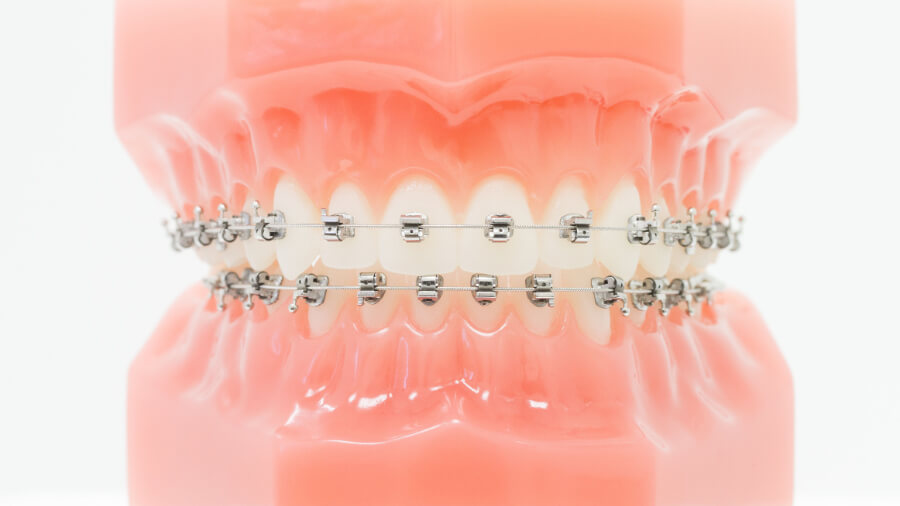
Classic braces
Tooth misalignments can be corrected the classic way with visible metal brackets. Since these braces are visible, they are mainly used on children.
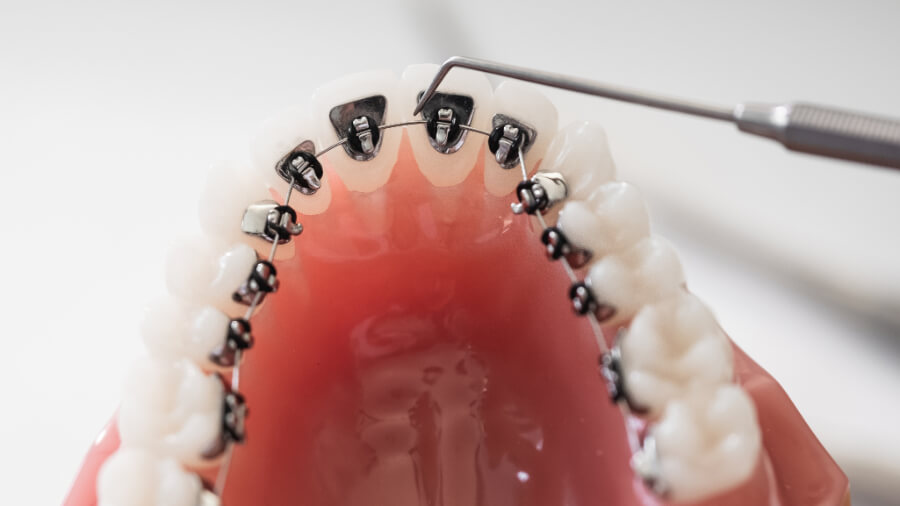
Invisible lingual braces
These revolutionary braces are attached to the inside of the teeth and are called lingual braces. The braces are individually manufactured in a special laboratory so that the lingual brackets can be ideally positioned and produce more accurate tooth movements.
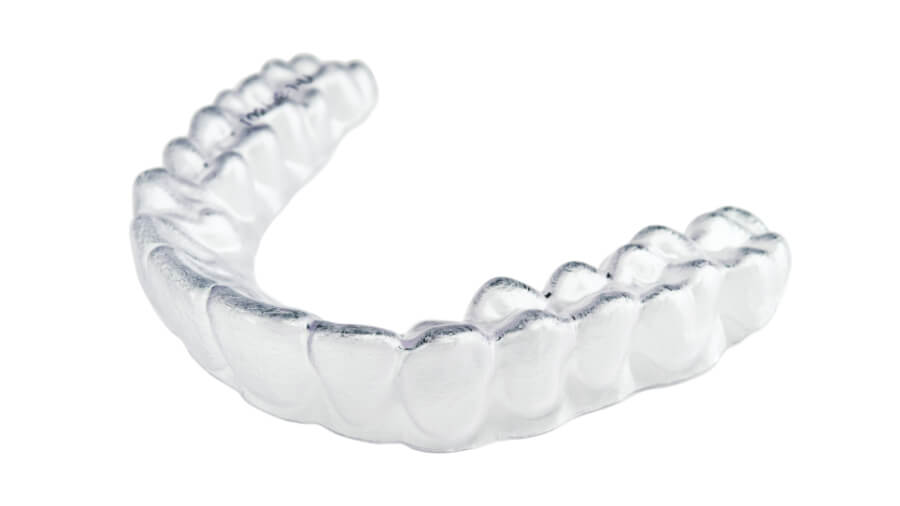
Clear aligners / splints
If the tooth misalignment is light to moderate, tooth corrections with transparent, removable aligners/splints are possible. This popular, removable treatment method allows good oral hygiene, is practically invisible and uses in the majority of cases, tooth-colored plastic attachments. They work efficiently and precisely.
PRE-TREATMENTS IN CHILDREN
During growth, a positive impact can be achieved on both, the skeletal/jaw position and the dentition. This can reduce the future treatment time for fixed braces and minimizes the associated risks and side effects.
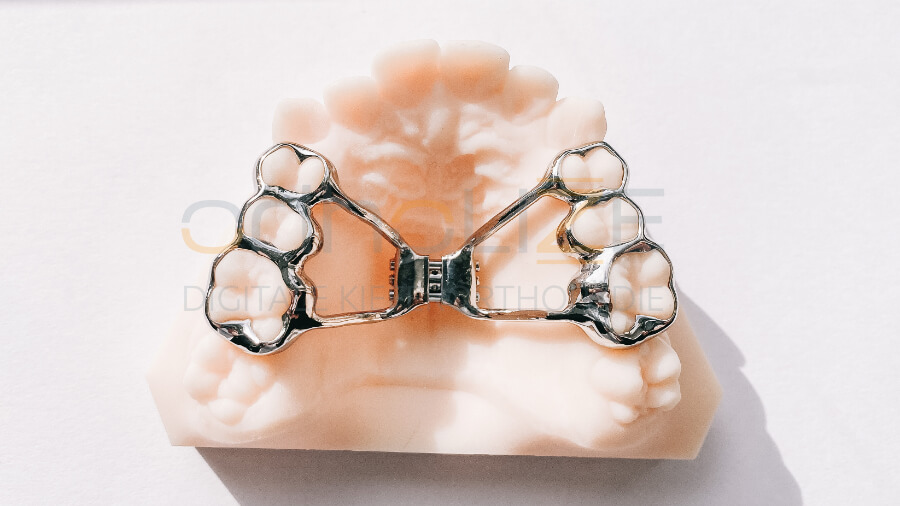
Palate expander
A palate expander is used whenever the upper jaw is too narrow compared with the lower jaw. Because the mid-palatal suture has not yet ossified in children, the upper jaw can be widened. So that the result stays stable, the appliance is left in the mouth for a certain time after the expansion.
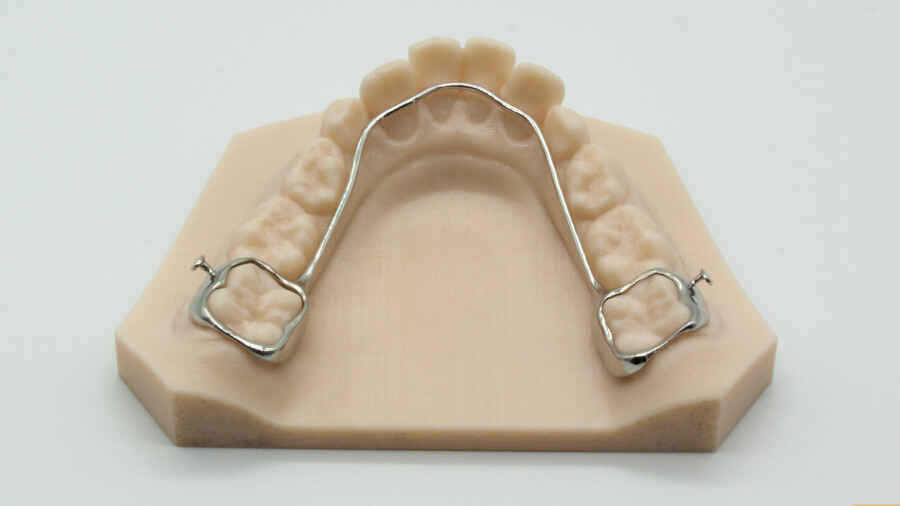
Lingual arch
The lingual arch is used when space in the lower jaw needs to be preserved because of early tooth loss or the change of dentition.
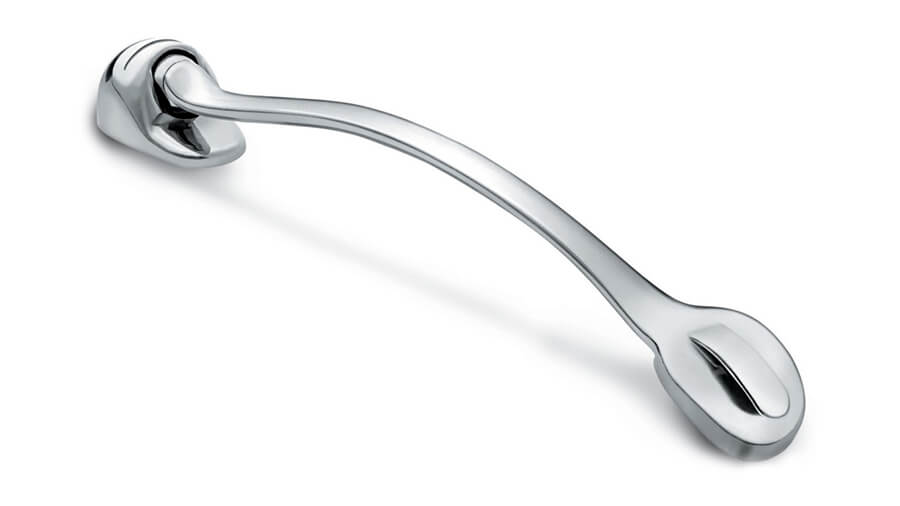
Distaliser (Carriere® Motion Appliance)
The distaliser consists of a lingual arch and two "bars" fitted in the upper jaw. With elastics, a retruded lower jaw can be brought forward. It is important that the elastics are worn at all times during the treatment; they are only removed for eating.
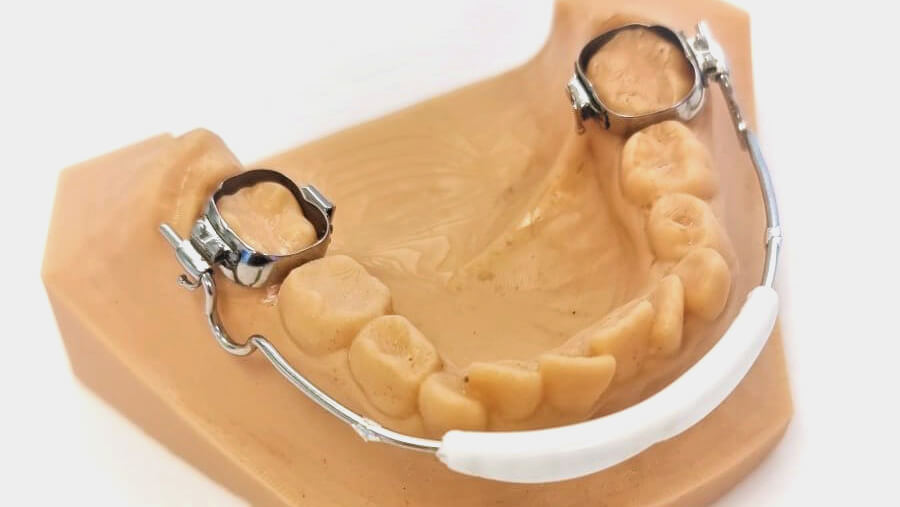
Lip bumper
This bow-shaped appliance can easily be inserted and taken out. Ideally it should only be removed for eating. The aim of this bow is to relieve the crowding of the front teeth in the lower jaw.
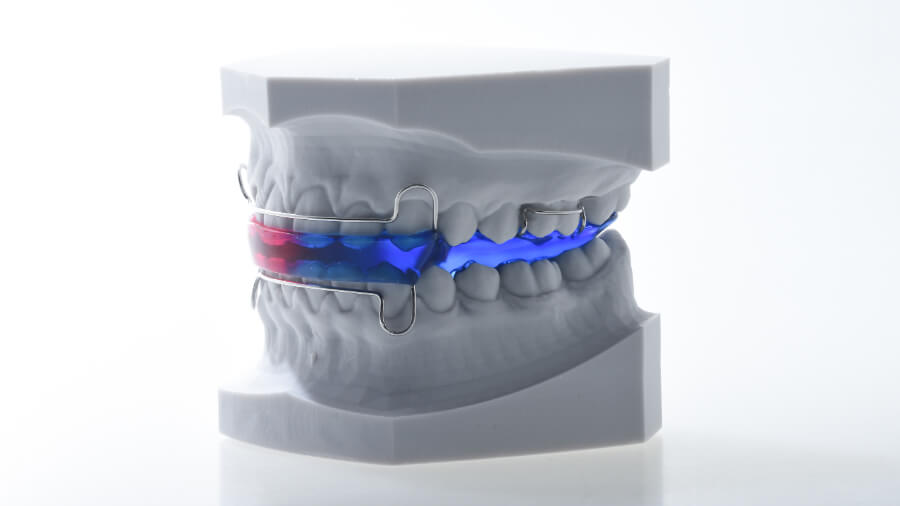
Monobloc
This removable appliance brings the lower jaw forward. At the same time a deep bite can be opened up or an open bite closed. At Züri Zahni this appliance is fitted with a chip so that the exact wearing time can be determined. In this way we increase the cooperation and motivation of our young patients.
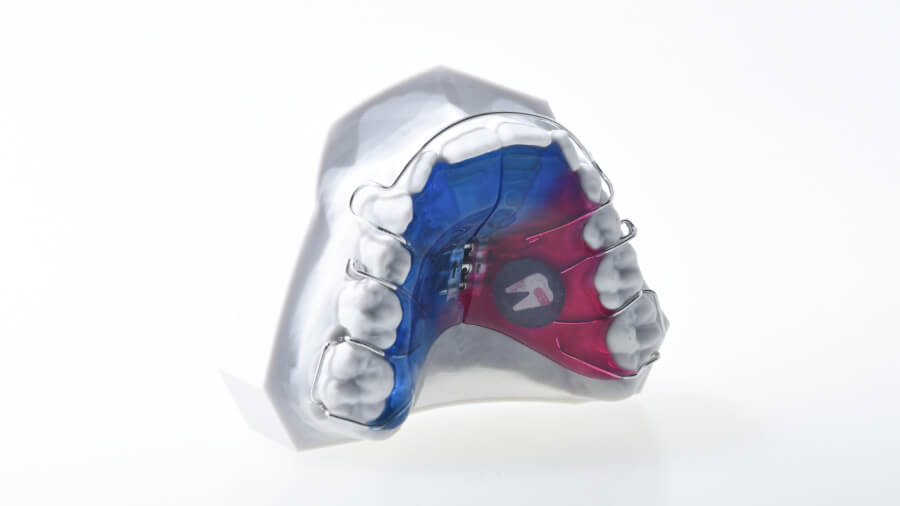
Removable plates
Removable plates can be indicated for the upper as well as the lower jaw. Depending on their function they have to be built differently: some are fitted with springs or expansion screws, while others have anterior or lateral bite blocks.
THREE STEPS TO A BEAUTIFUL SMILE
Which braces are right for you depends on a number of factors. Depending on the type and extent of the misalignment as well as your individual wishes and circumstances, we find the optimal appliance for you. Every correction of jaw and tooth position is tailored precisely to your needs and aimed at long-term success. We will advise you at an initial consultation.
Request Appointment Now1. Appointment and initial examination
Call us to arrange an appointment for an initial examination. We are happy to hear your personal wishes and will explain the treatment options to you.
2. Preparation of documents
In order for us to be able to work out your treatment plan, we prepare your personal documents – including 3D jaw scans, X-rays and photos. Your individual treatment plan will be drawn up on the basis of these documents.
3. Discussion of the treatment plan
Your documents and the treatment plan will be discussed with you in detail. The administrative aspects like estimation of costs and dental insurance coverage can also be clarified here. The planned treatment can now be started anytime.


WHAT OUR CUSTOMERS SAY ABOUT US

Elisa Sassi★★★★★ My teeth were never so well taken care of at a dentist before. Neither was I! I couldn’t be more pleased with my experience. Dr. Adrian Cano took the time to meet me and learn my story, so it was so easy to trust him even this being my first time there. My smile is more beautiful than ever PLUS I got to meet some really nice people and watch Netflix on the ceiling while he was getting his work done! Also, to the expats out there, apart from German, they speak English, Spanish and French.

Dana Duppong Triana★★★★★ after many years of not going to dentist because of fear .. it was necessary to give into that fear and I am so happy I have found Dr. Zimmermann and her team who treated me with care, understanding, patience and no judgement. The treatment received was well explained and procedures handled as gentle as possible and costs explained and were reasonable for treatment received. I highly recommend Dr. Zimmermann and her team.

Marie Claire Claus★★★★★ The work they do is top quality, I highly recommend them. I had many of my teeth fixed and now waiting for Invisalign treatment! I really appreciate that they spoke to me in English whilst providing me with an excellent painless service. I highly appreciate the call the day after each procedure to check if you are ok or if you have any pain! Keep this up, it shows that you care for you patients.

Xavier Tinguely★★★★★ Awesome high-tech dentist practice. I would highly recommend the place & Dr Cano. Love watching Netflix while having my teeth done! The team is also very professional and passionate about their job. Great experience

Paul Dirksen★★★★★ Admittedly... I don't think anyone is looking forward to going to the dentist. But going to Züri Zahni has always been a pleasure! Very friendly and professional staff. They know how to comfort you and they are very communicative in what will happen and why. On top of that, it is the first dentist that I encounter, that does follow-up calls with their clients to see how things are going the day after.

Vanessa B★★★★★ Very pleasant office, immediately felt welcomed and calm when I came in. They have a very friendly team and a relaxed atmosphere. Dr. Andrea Zimmermann was a great dentist. You can also watch Netflix during your treatment if you'd like to. 10/10 would recommend.

Nicole Aebersold★★★★★ We have been there with our son, 3 years old. he had to have his front tooth removed. everybody at the practice was very understanding and friendly - and of course the most important fact - very professional. thank you a lot!

Anne Carolina Ramos★★★★★ I've been at Züri Zahni in different times, for me and my children. Dr. Zimmermann and all the assistants are simple great! They are very friendly, careful and efficient. Moreover, they organise everything to make you feel at home (including netflix with headphones while they work). I strongly recommend them and I'm very happy to have them so close by!

Joanna G★★★★★ I highly recommend Zahnarztpraxis Zuri Zahni! Very professional and painless treatment, friendly doctors, transparent cost description, preventive recommendations for the future. PS. On top of it you can watch netflix ;-)

Nicolas Mottais★★★★★ For the first time in my life i was happy to go the dentist. Frau Zimmerman and her Team were welcoming and patient, they listen and advise me all the way. they were very professional but also very easy to talk to and very accomodating. highly recommend them.


STILL HAVE QUESTIONS?
DO YOU WISH AN APPOINTMENT?
Questions & answers
When is the first visit to an orthodontist recommended?
Certain tooth and jaw misalignments should be recognized and treated at an early stage. A first check-up with the orthodontist is therefore recommended as early as the ages of 6 to 8.
In childhood, braces can influence growth and therefore the position of the jaws – a so-called pre-treatment makes a later tooth correction simpler and thus reduces the time spent in fixed braces ("Gartenhaag"). Shortening the treatment time is desirable, because fixed braces can bring side effects with them.
Can misaligned teeth also be treated in adults?
The wish for well-aligned teeth often arises in adulthood. Today there are good treatment options for adults too. We are happy to advise you on the braces that suit you.
Orthodontic course of treatment
1st appointment: orthodontic consultation The first consultation serves to establish any existing jaw and tooth misalignments. You will be informed about the treatment options and the next steps.
2nd appointment: preparation of orthodontic records If braces are indicated, we prepare personal records. The upper and lower jaw are scanned with a modern 3D scanner – these dental models are then printed for you on our 3D printer. Photographs of the teeth and head are taken and two overview X-rays are produced. All of these records are needed to draw up the treatment plan.
3rd appointment: discussion of the orthodontic treatment plan The orthodontic treatment plan is discussed with you/your child in detail. If several treatment options are possible, the advantages and disadvantages are talked through. You also receive a cost estimate, which is discussed with you.
4th appointment: start of treatment From the 4th appointment the treatment begins and the planned braces can be fitted soon afterwards. It is important that the scheduled check-up appointments are kept.
What kind of braces are there?
Removable braces Unlike fixed braces, removable braces can be taken out of the mouth temporarily. These appliances are mainly used in children. There are many kinds of removable braces with different modes of action. Some act on growth, others serve to correct small misalignments or to widen the upper jaw, and still others act as retainers. Which appliance is the right one is decided individually.
Fixed braces (in Swiss German: "Gartenhaag", "Blättlispange", "Töggelispange") With fixed braces (Swiss German: "Gartenhaag"), small plates (brackets) are bonded to the teeth and connected with a wire (archwire). These active archwires exert continuous pressure or pull on the teeth to move them into the ideal position. Depending on the complexity of the tooth movement, the archwires are changed at regular intervals. Fixed braces can be placed on the outside or on the inside of the teeth.
Invisible fixed braces / braces on the inside / lingual technique With the lingual technique (lingual = on the tongue side), special lingual brackets are bonded to the inside of the teeth, so that misalignments can be corrected without anyone seeing the fixed braces. The treatment is therefore excellent for people who, for personal or professional reasons, do not want to wear visible braces.
The brackets and archwires of these fixed braces are made individually for you in a special laboratory. Using state-of-the-art computer technology, an appliance tailored to you is produced. There are many reasons why such invisible lingual braces are preferred today over classic fixed braces:
*Advantages of lingual braces:*
- Invisible tooth correction - More precise treatment results - Reduced risk of decay - Short treatment times - Suitable for patients of every age group
You can find more information on invisible braces at the following link: https://www.lingualsystems.de/ueber-win-linguale-zahnspange/
Classic fixed braces on the outside With this appliance the brackets are bonded to the teeth from the outside in the classic way. We work with modern Speed brackets. Unlike older brackets, these no longer need elastic rings. That is ideal, because rubber encourages debris and therefore bacterial deposits. Here too, the aim is to reduce the risk of decay.
The trend today, however, is towards braces that are not visible.
Aligners / transparent braces Aligner therapy (to align = to straighten) is used for milder tooth misalignments.
Once a digital 3D scan of the upper and lower jaw has been made, the desired tooth correction can be illustrated with a video. If you like the planned correction, the treatment can be started.
The treatment works with a sequence of thin, transparent plastic trays made for you, the so-called aligners. Depending on the misalignment, an individually determined number of aligners/trays is needed. The transparent trays have to be worn 22 hours a day and changed every 2 weeks.
How long will orthodontic treatment take?
As a rule, treatment with fixed braces takes between one and two and a half years – but this period can vary considerably and depends on the following factors:
- Is the treatment carried out in childhood or adulthood? - How far do the teeth have to be moved to reach the ideal position? - What is the biological response, that is, how quickly can the body break down and build up bone? - How good is the patient's cooperation? - Does the patient look after their braces?
Because many factors determine the treatment time, you will receive more precise information at the consultation appointment.
What does orthodontic treatment cost?
Treatment costs vary depending on the complexity of the treatment plan. In every case a personal cost estimate is drawn up and presented to you in a consultation. Billing follows the Swiss Dentotar® tariff system using the current tax point value.
How much does my dental insurance cover in the orthodontic treatment?
Please check with your supplementary health insurance to what extent you are covered, so that you can estimate the costs you will face. Supplementary policies differ in their level of cover and in the benefits per year and per case.
How do teeth stay straight for a lifetime?
Whichever treatment method is used, the retention phase that follows a successful treatment is very important. To prevent the teeth from shifting again and to stabilize the ideal position achieved, retainer wires are bonded to the inside of the teeth. This wire stays in the mouth for life and should be checked regularly.
At what age are braces used?
Certain tooth and jaw misalignments should be recognized and treated at an early stage. A short check-up with the orthodontist is recommended as early as the ages of 6 to 8.
Orthodontics for children and adolescents The typical age for a "classic" orthodontic treatment is between 10 and 16. Exactly when braces are fitted depends on individual circumstances and is discussed with you beforehand.
Orthodontics for adults The prerequisite for orthodontic treatment in adults is the health of the teeth and the periodontium. Because we work across disciplines at our practice, an assessment of this is recommended before orthodontic treatment begins. Once your dental health is assured, nothing stands in the way of orthodontic treatment. Even demanding situations can be treated with invisible braces (lingual technique). For smaller misalignments, treatment with transparent trays / aligners is also suitable.